“People will not look forward to posterity, who never look backward to their ancestors”
On the 4th of November in 1789, The Rev. Richard Price gave an address at a dinner of the ‘Revolution Society’ – an association of ministers who met annually to celebrate the English Revolution of 1688. Price’s address was titled ‘A Discourse on the Love of Our Country’, and in it he claimed that the principles of England’s Glorious Revolution were now being replicated in France. He hailed the principles of an elective basis for royal succession; that the people have the right to choose the sovereign. Edmund Burke read this ‘sermon’ with distain. He opposed the analysis of France in 1789 as somehow related to England in 1688, stating that “the gentlemen of the Society for Revolution see nothing in that of 1688 but the deviation from the constitution; and they take the deviation from the principle for the principle” He also fundamentally disagreed with the principles of the French Revolution as doing away with “manners and opinions” his analysis will contend that the preservation of principles and restraint by religion – “the spirit of a gentleman and the spirit of religion”, and the aesthetic ways in which they were embodied, were the bedrock of Burke’s ‘lovely’ country.
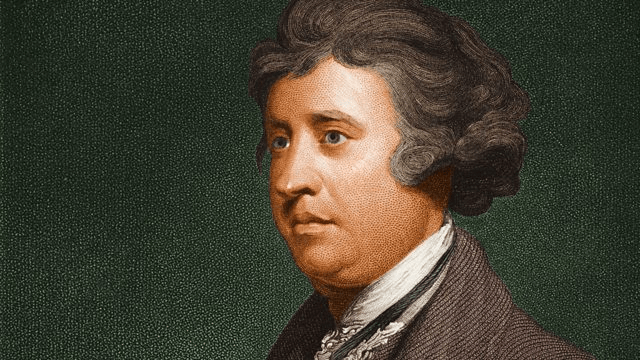
In the preceding line to the title quote, Burke said that “There ought to be a system of manners in every nation, which a well-formed mind would be disposed to relish.” For Burke, principles were what made up nations, and this constituted their ‘loveliness’. Alongside manners Burke identified a similitude of religion and law that permeated through Europe. A ‘system of manners and education that softened, blended and harmonised the colours of the whole.’ All of these values can be summed up in temperance; temperance in change. Burke was essentially not against change, but he was against revolution. He saw revolutionaries as coming from a starting point of despising all that belonged to them; throwing out their historical and cultural legacy and beginning anew. Indeed, he said that the good politician should have a “disposition to preserve and an ability to improve.” Burke did not believe that true reform could come from violence, but that it could be taught through proper education and achieved by building on the foundations of the past, not by destroying. He explained that in 1688 the English had not done away with the past, but made changes that conformed to the nation’s historical growth and to its Constitution. “A state without the means of some change is without the means of its conservation” What he meant was that without the means to change and adapt, some things may be done away with, such as constitutions. For Burke, organic evolution and compromise was necessary to preserve principles. Burke examined 1688 and stated that during the English Revolution, England found itself without a king, but it did not do away with monarchy but rather carried on, acting “by the ancient organised states in the shape of their old organisation”. What he saw from this could be summed up as classical-Christian culture of Europe and its conventions.
For Burke this long tradition of the ‘spirit of the gentleman’ was brought from history. It was the historic rights and ancient customs as being handed down through the generations. He was keen to appeal to Magna Carta by illustrating the link between the principles of England and the people of England. “…from Magna Carta to the Declaration of Rights it has been the uniform policy of our constitution to claim and assert out liberties as an entail inheritance derived to us from our forefathers.” What Burke meant by this was not the static, physical handing down of various ideals, but rather the learning of the methods of one’s forefathers, guided “not by the superstition of antiquarians, but by the spirit of philosophic analogy.” Indeed, Burke used the idea of ‘spirit’ numerous times in the Reflections. What he meant is in the same way that past generations have done things, not necessarily the same things. From this he was able to defend 1688 and denounce 1789. He stated that all past ‘reformations’ had evolved upon “the principle of reverence to antiquity”. He called this the “pattern of nature”, by which “institutions of policy, the goods of fortune, the gifts of providence are handed down to us, and from us, in the same course and order.” This pattern of nature was important to Burke because it was based on the practice and experimentation of past generations; the empirical approach to civilisation’s values. He criticised France’s theoretical way of ‘conjuring up’ values from nowhere, by individuals who had no right to change the values of the age. This approach based on experience was highlighted in his opposition to parliamentary reform based on the fact that it was based on speculative theories of government. Against this he relied on the ‘happy experience of a country slowly growing in liberty and prosperity for the past 500 years.’ It is argued that Burke was interested in the mediaeval age as he saw it as the practical application of the handing down of manners, principles, laws and institutions to succeeding generations. The key here is ‘practical application.’ Burke is concerned with both the substance and the way things have been passed down. Ultimately for Burke, this culminated in his social contract, which was not between individuals and the state, but “a partnership not only between those who are living, but between those who are living, those who are dead, and those who are to be born” Because of this Burke is able to argue that no one person is able to renegotiate their social contract with the state.
So there is a ‘spirit of the gentleman’, but there is also the ‘spirit of religion’. Burke saw Church and state as inseparable. “The consecration of the state by a state religious establishment is necessary, also, to operate with a wholesome awe upon free citizens, because, in order to secure their freedom, they must enjoy some determinate portion of power. To them, therefore a religion connected with the state, and with their duty toward it, becomes even more necessary than in such societies where the people, by the terms of their subjection, are confined to private sentiments and the management of their own family concerns.” The constraint of a ‘higher power’ was the determining factor for Burke. He realised that this principle protected against tyranny. He rejected the way the French had destroyed both the church and the state, and thereby had no constraint on their civil society; “France, when she let loose the reins of regal authority, doubled the licence of a ferocious dissoluteness in manners, and of an insolent irreligion in opinions and practices.”
This explains his somewhat liberal stance on religious toleration. He saw the problem not between Catholics and Protestants, not even between Christians and other believers, but between religion itself and atheism; because atheists had no higher constraints on their virtues nor their power. Indeed, he stated that “atheism is against, not only our reason, but our instincts” He further explained that due to the English nation’s acceptance and trust of the established church, they did not put their trust in the “unsteady and precarious contribution of individuals.” Here one can see Burke’s distain for the individual over the collective. This distain is epitomised in the intellectuals of France; who Burke saw as unwise individuals destroying the collective wisdom of the past.
It could be argued that the aesthetics of Burke’s philosophy are key to understanding the title line. The idea of a ‘lovely’ country is that it ought to be lovely in the eyes of all people. This required the embodiment of political and social institutions in particular members of society. For Burke the institutions of monarchy and hierarchy should be embodied in kings, queens and members of the nobility, and that these people should practice the aristocratic and chivalric qualities. Furthermore, Burke saw the country houses of the aristocracy as depositories of civilised virtues, with libraries as collections of ancient artefacts which cultivated the aesthetic pleasures of society. Without these physical elements, humans would be at the mercy of their metaphysical passions.
For Burke, when the people loved and admired their rulers, civil and stable society ensued. Therefore, the abstract ideals of the rights of man, as promulgated by the French Revolution could never have the same affect on the people, nor create stable society, for one cannot love an idea as much as a person. For “when men in that rank lose decorum, they lose every thing.” Burke blames the philosophes for the demise of the individuals and thus the principles, because they promulgated the downfall of physical realities for high-minded abstract concepts.
Burke is often accused as being a romantic and a reactionary, and from the outset the title line could be used to defend that notion. However, here we can see the rationality of Burke. Burke did not believe that one must accept everything about one’s country; be it wise or foolish, but that one must begin from a disposition of reverence and gratitude for what has gone before. Whether the country is lovely, or in need for reform, the country is not on singular instance of principles. Indeed, Thomas Paine wrote that ‘every country would be the same if it abided by the same principles of freedom and justice’. However, for Burke the historical experience of each country defined its progress. Each society had its own unique tradition. “Our country is not a thing of mere physical locality. It consists, In a great measure, in the ancient order into which we are born.” Indeed, nor did Burke think that all the principles of a nation should be loved. For instance, he was against the tyranny of the British Government upon the Catholic majority in Ireland. The title line therefore is used as a criticism of France’s absence of moderation, but also this line explains the rational nature of his argument, that one’s country must be lovely for one to love it. It is not love simply out of ignorant patriotism, but love because of certain principles that a nation has gained from history.
Despite all of this, he says ‘ought to be lovely’, not that it should be lovely or that we should make it lovely, and this is the stubborn, romantic nature of Burke. For Burke, revolution, specifically the French Revolution was against the nature of things; rebellion against God and disrupting the universal order; and revolution in general is inherently bad. When looking it at it from this perspective, we can understand the irrationality of Burke, that even if the country is not lovely, we ought to love our country, because it is unnatural not to. Furthermore it is questionable whether the aristocracy and leaders of French society embodied the principles that Burke forwarded. Marie Antoinette, for instance, was known to have led a decadent lifestyle paying no homage to the history of France. Burke often ignores the negligent behaviour of the French aristocracy in order to forward his thesis against the French Revolution. When looking at it from this angle it could be said that Burke’s principles were no more physical than those of the revolutionaries, since both were abstract and only existed in the ideal. Nevertheless, Burke saw his values as a permanent and evolving part of the history of nations. This, he said, was embodied best in the British Constitution, because it was in accordance with nature. “I wish my countrymen rather to recommend to our neighbours the example of the British constitution, than to take models from them for the improvement of our own” Indeed, even though Burke was against the British tyranny in Ireland, this did not naturally lead to arguing to do away with the British Constitution.
Burke saw the French Revolution as wanting to destroy the ‘spirit of the gentlemen’ and the ‘spirit of religion by first destroying their belief systems. For Burke, the French Revolution was not simply a threat to the Monarchy, the Established Church, or the Aristocracy, but also to all ‘men of property’. From his criticisms of the French Revolution we can see his values. For Burke, a ‘lovely’ country was one resolved to preserve an “established church, an established monarch, an established aristocracy and an established democracy, each in the degree it exists, and in no greater.” It was the upholding of these virtues in individuals, to whom the people could admire that created a country that all could love. A lovely country was one where ‘peace, justice and aid for the weak ensued’, and this was best expressed in Britain, which had been called to be the ‘tutelary angel of the human race’ because it’s institutions and its people looked backward to their ancestors.
“But the age of chivalry is gone. That of sophists, economists, and calculators has succeeded; and the glory of Europe is extinguishes for ever.”
Bibliography
Reflections on the Revolution in France, by Edmund Burke (London, 1920)
Letters to a Noble Lord in The Works of Edmund Burke (Boston, 1839)
The Works of Edmund Burke (London, 1841)
Iain Hampsher-Monk, ‘Reflections on the Revolution in France’ in, David Dwan and Christopher J. Insole eds., The Cambridge Companion of Edmund Burke (Cambridge 2012)
Eileen Hunt Botting, Family Feuds: Wollstonecraft, Burke and Rousseau on the Transformation of the Family (New York, 2012)
Yuval Levin, The Great Debate: Edmund Burke, Thomas Paine and the Birth of Right and Left (New York, 2013)
Michael Freeman, Edmund Burke and the Critique of Political Radicalism (Oxford, 1980)
Gerald W. Chapman, Edmund Burke: The Practical Imagination (Cambridge, 1967)

 Izaak Tanna
Leave a comment